Now Reading: Executive Chef Vincent Yong Of Maison Boulud On Why Old Habits Still Matter
-
01
Executive Chef Vincent Yong Of Maison Boulud On Why Old Habits Still Matter


A Malaysian chef in Singapore, working through a French lens. We talk to Executive Chef Vincent Yong of Maison Boulud on tradition, inspiration, and why some old habits should never die.
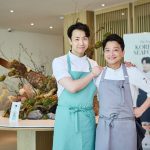
Sometimes, it takes leaving home to see just how far it travels. In Singapore’s Marina Bay Sands, at Maison Boulud—one of the most quietly assured dining rooms on the island right now—Executive Chef Vincent Yong is doing exactly that. Malaysian-born and KDU-trained (that’s Kolej Damansara Utama in collaboration with the prestigious Swiss International Management Institute), he’s spent two decades rooted in classical discipline and shaped by some of Marina Bay Sands’ most exacting kitchens. A longtime presence there, he helped build out charcuterie and raw bar programmes, mentored rising talent, and led the revival of Daniel Boulud’s storied l’oreiller de la belle aurore for the World’s 50 Best stage.

On a recent trip—one crowded with numerous very good meals—his was the one that stayed with me. Not for theatrics, but for its clarity of thought and sheer deliciousness. There’s a certain pride in seeing our own hold court abroad, even if just across the cause way. As part of the opening team at Maison Boulud Singapore, Vincent leads with rigour and intent, shaping seasonal menus while instilling a culture of high standards and forward thinking. A Malaysian making his mark, Vincent walks us through the thinking, the training, and the convictions behind the food.
You trained in Malaysia, built your career in Singapore, and now helm a French institution—how do you define your culinary identity?
My culinary identity is a journey that reflects every place and per son who helped shape me. Malaysian food is straightforward and full of memories, and those childhood flavours never leave you. They shaped the way I understand comfort, warmth, and sincerity in cooking.
When I came to Singapore, the pace was faster, the expectations were higher, and discipline was non negotiable. I was lucky to have a mentor who was strict. He taught me to respect every process, no matter how small. When I moved to the former Santi I handled ingredients I had never seen before, and learned that respecting ingredients was not just a rule. It was a philosophy.
Now at Maison Boulud, my cooking has taken on a distinctly French, or rather, Daniel Boulud’s spirit. Western cooking styles have similarities, but French technique has a depth that continues to inspire me. Today, I honour where I come from, stay true to what I have learned, and always cook with intention.
Having come up through kitchens shaped by both Santi Santamaria and Daniel Boulud’s legacy, what tension or harmony exists between Spanish rigour and French precision?
Spanish and French cuisines develop flavours in different ways. Spanish cooking is often more straightforward, and flavours come together quickly. French cuisine involves more steps, even for something as simple as making a sauce. A lobster bisque, for example, relies on a layered method and the richness of butter and cream. At Santi, I formed the backbone of my respect for ingredients. At Maison Boulud, under Chef Daniel’s philosophy, I learned the importance of intention and seasonality.
At the end of the day, both cuisines remain grounded in the same credo–it is about consistency, discipline, and the values that carried me from one kitchen to the next.

As a Malaysian leading a major restaurant in Singapore, do you feel a responsibility to represent where you come from?
I feel honoured every day when I walk into Maison Boulud. I never imagined I would one day be the Executive Chef of a French restaurant, especially one with such a strong legacy. I do not feel an official responsibility to represent Malaysia, but I do carry a sense of pride. When Malaysian guests dine with us, there is an immediate sense of connection. There is warmth and familiarity in those moments. I can see that they feel proud to see a Malaysian leading a French kitchen, and that gives me quiet motivation.
Your formative years at Santi were steeped in classical European discipline. What’s one kitchen ritual you still insist on today?
The ritual that has never left me is the sharpening of knives. I believe strongly in the saying that a craftsman must first sharpen his tools before he can do good work. When my knives are sharp, I feel grounded and ready. It sets the tone for the day and reminds me of the discipline I have cultivated throughout my career.
Another habit that stayed with me is my sense of organisation. At Santi, everything had its place, and that discipline became muscle memory. Even today, I instinctively reach for things where they should be. I make sure my team practices the same discipline, because good mise en place will always show itself when service becomes intense. A well-prepared kitchen is the difference between chaos and harmony.

In today’s evolving dining climate, where does tradition sit for you?
Tradition is the foundation of our craft. Without it, there is no structure and no meaning behind what we do. But tradition should not be rigid. It must remain open to improvement and evolution. Technology has changed how kitchens operate. Better equipment allows us to shorten cooking times while maintaining or even improving quality. I see technology as a companion to tradition rather than a replacement.
Precision is a word often associated with Maison Boulud. What does it mean to you?
Precision is not about making something look perfect. Precision is about consistency, discipline, and the ability to repeat excellence day after day. Precision begins long before plating, from how a carrot is cut to how a sauce is seasoned to how ingredients are stored. I constantly remind my team that if there is one thing we must achieve every day, it is consistency. I hold myself to the same standard. Precision is not about pressure. It is about pride in our craft and food.
You’re known as a hands-on mentor. What’s an important lesson you instill in your brigade?
Discipline, manners, and attitude. Young chefs must learn these three things before anything else. They must follow instructions carefully and master the basics before they can create freely. Curiosity is important, but the fundamentals must be strong.
I also try to teach them empathy. I want them to understand different perspectives. When I teach my team about pâté, which I have been making for years, I share the methods I tried that did not work and explain why they failed. This helps them avoid unnecessary detours and teaches them the reason behind the process. It builds understanding rather than blind repetition.

We have to talk about that Uni custard special. It was the most memorable dish of our trip.
The inspiration came from Chef Daniel Boulud’s cookbook titled Daniel: My French Cuisine, specifically the recipe for Langoustine & Uni Chaud Froid. The dish caught my attention because it balanced richness with elegance. I used the recipe as a foundation and added my own elements.
I believe sea urchin and caviar complement each other beautifully. The key is to handle them with care. I kept the uni custard lightly seasoned, and the langoustine consommé was intentionally very light. This ensured that both ingredients could shine together without becoming heavy or overwhelming. The goal was harmony rather than indulgence.
Beyond the Uni Custard, what dish on the current menu resonates most?
The Pâté En Croûte is the dish closest to my heart. It represents everything I value in cooking, including discipline, attention to detail, patience, and the appreciation of tradition. The preparation requires time, effort, and complete focus. The pastry must be precise, the meat must be properly marinated, the foie gras must be done perfectly, and the mushrooms must be thoroughly washed. The consommé requires multiple processes. Even the slicing must be done with care.
When you finally see the dish on the plate, it looks simple and elegant, but the work behind it is immense. It shows how I’ve improved over the years and that is why it means so much to me.
Are there any dishes on the horizon that signal a new creative direction?
Maison Boulud is evolving toward a more soulful expression of French cuisine, inspired by Chef Daniel’s journeys and his child hood memories of home-cooked meals in Lyon. The cooking is honest, crafted with care, and guided by the seasons.
In fact, we are introducing a new menu series that spotlights a different region of France. Each regional menu features dishes and ingredients emblematic of its locale, paired with wines from the same area that reflect the character and spirit of the region.
IG: @maisonbouludsg