Now Reading: The Curious Culinary World Of Edible Mould
-
01
The Curious Culinary World Of Edible Mould


The fuzzy white patch at the back of your fridge is bad news. The fuzzy white patch on a carefully cured salami? That’s another story entirely. Here’s how chefs and food cultures around the world have been putting mould to work for centuries.
You decide it’s that time of year again where you liberate the long-held prisoners that have been languishing away at the back of your fridge. You take out a peach that’s been sitting there for a while—or at least it used to be a peach. Now it’s more of an irregularly shaped blob that seems to have grown a white beard over time. That’s most people’s experience with mould on their food.
Certain other people, however, a lot more informed than you and I, have been deliberately doing something similar for centuries in some cases. Only with them it’s intentional, won’t kill you, and, in many cases, actually tastes really good. You probably know all about blue cheese, but there are yet stranger fungal marvels out there waiting for you to taste them. Let’s take a look at a few.

Image: makafood | Pexels
Oncom
Long before “zero waste” became the sort of phrase you’d find emblazoned across reusable tote bags, Indonesian cooks were already putting it into practice.
Hailing from West Java, oncom is traditionally made from the leftovers of other food productions. Okara, the fibrous soy pulp left behind after making tofu, and peanut press cake, the dry remains after extracting peanut oil, would ordinarily have been thrown away. Instead, Indonesians took to inoculating these nutrient-rich scraps with a bright orange mould called Neurospora intermedia (or, in some cases, a darker mould for black oncom).
What happens next is that the fungus spreads throughout this loose collection of scraps, pulling everything together into a dense cake that can be sliced almost like tofu. The mould itself adds its own touch of flavour, contributing an earthy, nutty sort of taste that draws parallels with mushrooms. You’ll commonly find oncom cut into slabs, dipped in batter, and deep-fried until crisp. Either that, or it’s broken into chunks and simmered in piquant Indonesian stews.

Image: City Foodsters | Wikimedia Commons
Traditional Chinese cooking
Ever sat down and just admired the deep ruby-red skin of a traditional Peking duck? Congratulations, you were just marvelling at mould. Red yeast rice has been produced in China for well over a thousand years using a particular strain of fungi called Monascus purpureus. An unmistakably striking crimson mould, it colonises steamed rice, working its way through until every grain is dyed its almost impossibly vibrant shade of red. It was food colouring before food colouring was even a thing.
But it’s not all for show, with the fungus also acting as a natural preservative while imparting a subtle layer of savoury complexity to the dishes it inhabits. You’ll find its fingerprints all over traditional Chinese cuisine, with the aforementioned Peking duck owing much of its characteristic red hue to it, while things like red fermented bean curd and certain traditional rice wines also rely on the mould to develop their appearance and flavour.

Image: Vilnis Husko | Pexels
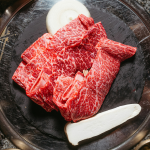
Koji-cured meats
Traditional European salamis are no strangers to mould, with that dusty white coating, Penicillium nalgiovense, working to protect the sausages under its care from undesirable microbes, as well as helping them dry evenly.
Some modern charcutiers, however, have started wondering whether mould could do a little more than simply stand guard, and it’s this curiosity that led them to borrow Aspergillus oryzae—better known as koji—from Japan. You might recognise it as the architect behind Japanese staples such as miso, soy sauce, and sake, but when introduced to cured meats, a new side of it comes out entirely.
Packed with enzymes that aggressively dismantle proteins into amino acids, including glutamates, the compounds responsible for umami, it expedites the traditional curing process, resulting in meats that harbour a savouriness almost exaggerated in its intensity. It does make you wonder why this wasn’t discovered centuries ago, but it’s equally a delightful reminder that there are still culinary frontiers left to breach, and that many of them are hiding right under our noses.
It’s funny when you think about it, how just a little bit of intention can make all the difference between a cultural icon and something destined for the bin. Mould really does get a bad rap, but that’s down to us more than anything. If cultivated and guided in the right ways, it’s capable of taking scraps and turning them into delicacies, painting ducks crimson, and adding new dimensions to already excellent cured meats. Having said that, that’s probably something best left to the experts. You and I would be better served cleaning out our fridges a little more often than we currently do.
Opening image: Anna Pyshniuk | Pexels