Now Reading: Inside Story Of Ono With Shaun Liew
-
01
Inside Story Of Ono With Shaun Liew


Story of Ono has become a reference point in Kuala Lumpur’s specialty café scene, known for its hybrid approach to coffee and matcha, and its tightly considered approach to experience.
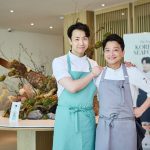
Story of Ono began in late 2021 in SS2, Petaling Jaya, at a moment when its founder, Shaun Liew, was recalibrating himself instead of coffee for a change. A former café operator, F&B lecturer, and two-time Malaysia Brewers Cup champion, Shaun found himself weighing the closure of his previous business as lockdowns dragged on and uncertainty around leases and survival set in.
The idea for Ono emerged almost accidentally from that in-between period: a collaboration between friends across coffee, matcha, and roasting, culminating in a café that builds on the strength of its convergence rather than leaning on any sort of convention.
Here, coffee and matcha are placed on equal footing, with signature drinks designed as deliberate hybrids and not just afterthoughts. It’s only been a few years, but in that time Ono has grown to become one of Malaysia’s most closely watched specialty cafés, and one at the forefront of a rapidly maturing coffee scene that is now drawing international attention. Here’s Shaun on its inclusion in The World’s 100 Best Coffee Shops 2026 with DaVinci Gourmet, among other things.

How did you feel when you first heard Story of Ono made the global top 10?
Okay, so to be honest, when I first started off Ono, my goal and my vision was to be the best café in the world. And when we got the nomination back in December 2024, I was quite shocked actually because, at the time, I never expected to be nominated because we were so new, right?
When they announced we were number nine last year, I didn’t know how to react. We were a bit overwhelmed, but at the same time truly grateful to be awarded the number nine spot for the first time. And I think it really pushes us a little bit in terms of, like, okay, so this is what’s happening, and we are at this level now, what do we do?
Beyond the coffee itself, what details do you pay the most attention to when shaping the Ono experience?
It’s in the smaller details. If you can see through the branding, for example, the choice of colour for the cups is very well curated in order to ensure that it’s cohesive as a brand. Even when it comes to the small details, like the menu, for example, the colour scheme, the palette, the food presentation, and focusing on the quality of the food, the coffee, and the matcha, I think that’s really, really important.
And of course, whenever customers come in to sit down and order, our team will be able to recommend things, especially if it’s your first time coming to our café. If you’re not sure what to order, you can always ask the team, and they’ll be able to guide you. People outside are our customers, and we treat them the same way we’d want to be treated if we went to a café. We hope to get recommendations because it helps facilitate the overall experience.
Paying attention to the small details is important. When it comes to food presentation and drink presentation, it’s not just cincai. It’s well thought out and carefully created together with my culinary and bar team.

Malaysia’s specialty coffee scene has grown rapidly in recent years. How would you describe where the country currently stands in its coffee culture and development?
The one thing that’s good about Malaysia is that we’re a progressive specialty coffee country at the moment. What I’m really happy about is that we’re progressive in terms of exploration—trying different coffees, trying different signature drinks, and exploring anything coffee-related.
I think Malaysia is at that stage right now, which is great, because specialty coffee actually started later here than it did in some other countries. But our growth has been super significant, to the point where other countries around the world are starting to take notice.
What’s a mistake you made in the early days that shaped how you run the café today?
So in the very beginning, when we first started, we were very set in stone. We were very firm on only doing things in a certain way. But then we realised that, especially when COVID restrictions started to lift, the kind of offerings we were providing may have suited that point in time, but now they didn’t.
If you keep doing whatever you’re doing, you’ll probably become very stagnant, which we actually were at one point in time. And then we decided, okay, I think it’s time to revamp our menu and our overall offerings. But it took us quite a while to make that decision, when really we should have made that decision as soon as we knew sales were declining.

Are there trends in specialty coffee right now that excite you—or ones that worry you?
I think the current trending one is pre-batched espressos. It’s where people batch their espresso the night before, and then when it’s slam time the next morning, it’s easy and convenient. It can be good, it can be bad—it really depends on how you extract the coffee. But for me, that would just be a trend. Sometimes, operationally, especially for high volume, it can be workable. But of course, here in Ono we definitely don’t do pre-batched espressos.
I think generally in the Malaysian market, people are starting to look for signature drinks that are made with coffee. There are a lot of cafés in the market today that are offering signature coffee drinks, but you have to make sure that they’re not too complicated to the point where people cannot understand them.
This trend actually started in China a long time ago—maybe about three to four years ago—but in Malaysia, it only started very recently. So we’re noticing that trend, like every café you go to probably has a signature coffee drink. Yeah, so that would be the trend that I can foresee coming.