Now Reading: Chef Sharon On Preserving Baba-Nyonya Recipes And Peranakan Heritage
-
01
Chef Sharon On Preserving Baba-Nyonya Recipes And Peranakan Heritage


Some recipes are written down. But for Chef Sharon De Souza, they live in the hands, the palate, and the memory of those who came before us.
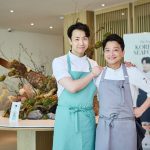
When it comes to Baba-Nyonya fare, recipes aren’t a mere list of ingredients, but rather a record of Peranakan history. A former banker, Sharon De Souza came to cooking with a mission: to learn her grandmother’s recipes and keep her family’s culinary heritage alive. Today, through Nyonya Supper Club, she brings the flavours of her Kristang and Baba-Nyonya roots to the table, one painstakingly recreated dish at a time. We caught up with Chef Sharon during her recent Malaysia Day collaboration with Park Hyatt Kuala Lumpur to talk family, food, and the traditions worth preserving.
After a career in banking, what was the turning point that made you take cooking seriously, eventually turning it into the Nyonya Supper Club?
I had no plans to start a supper club at first. My intention to learn my grandmother’s recipes was purely to be able to cook those recipes for my own family. That was a stressful enough endeavour. But to master a skill one has to practice it daily. Throwing dinner parties among friends and family was the short-term solution; my own family at that time was two adults and a toddler.
Very soon after, I received invitations to cook for small private dinners. My patrons were usually friends who were hosting guests from overseas and felt a traditional Peranakan dinner with a chef who had the relevant background to be able to introduce this cuisine in a meaningful way would be ideal.
You’ve described wanting to preserve the recipes you grew up with for the next generation. What did you feel was at risk of being lost?
Peranakan recipes are a dream subject for food anthropologists. Many of the recipes were created because of the intermarriage between local Malays and those of Nusantara origin with Chinese settlers as early as the 14th century in Melaka. From this came a cuisine that is uniquely Malaysian and not found anywhere else in the world.
Sadly, many older Nyonya recipes are getting rarer to find as they were not written down for posterity, as many were only passed down orally. The Nyonya’s kitchen skills are highly regarded by those who have an appreciation of this art form. These skills are what I fear will be lost as the younger generation chooses convenience over tradition.

You’re of both Kristang and Baba Nyonya heritage, and were born in Melaka. How have those two cultural influences shaped the way you cook and understand food?
Having both cuisines served as my daily meals when growing up has made me appreciate how different and complex Melaka’s cuisine is in comparison to the other parts of the country. Like most Melakans, I’m very proud of this. It has become a trademark at the supper club to serve Nyonya food alongside Kristang dishes with an explanation of their cultural backstory.
What memories come back to you when you cook your mother’s or grandmother’s recipes today?
Eating together as a family–three generations at one table. And how much effort the older generation of home cooks put into their cooking, because to feed your family was ultimately how they showed their love.
What immediately transports you back to your childhood or family table?
My grandmother’s Itek Tim soup spiked with VSOP Otard, Ayam Sio, and Achair Cili for the first day of Taon Baru or Lunar New Year. My mother’s ayam buah keluak!
Since family recipes are rarely written down exactly, how did you learn to recreate these dishes?
I was probably only nine when I started helping out in my grandmother’s kitchen on weekends. I started out by washing veggies, then graduating to using the mortar and pestle to grind spices. I showed no interest in cooking at that age. When I was 40, I asked my mother to teach me my late grandmother’s recipes. It
took me nine months. I think, like with any cuisine, it helps to be an apprentice under a senior cook to learn the ropes. I was lucky to learn from my mother. Sometimes she would say, “You think too much! Watch, like this, do, and remember the taste.” All her recipes were in her head. Her hands and brain work almost on autopilot. My mother is 86 this year, and although she moves slower, she’s not lost her touch in the kitchen. Mastery is a gift of repetition, as they say.
Is there something passed down in your family that you feel especially protective of?
My mother’s Pang Susi. A sweet potato bun with meat and potato filling. It is one of the first western confections introduced by the Portuguese to Melaka. My mother learned the recipe from her Tua Ee (maternal aunt) who lived in Limbongan, Melaka, who taught her to bake using a coal oven. Her Peranakan rendition of these Kristang buns are so good that even the Eurasian community in Melaka would ask if she could share her recipe.

What difference does attention to process and sourcing make to a finished dish?
If you do not have passion for what you do, you will soon tire of it. Kitchen work is tough. Grinding my own spices using traditional methods, and foraging and sourcing for special herbs, feeds my passion. I have older Peranakans who dine at the supper club from time to time. To them, hearing me use the mortar and pestle to make sambal belacan from scratch is like music to their ears.
Of the dishes you brought to your recent pop-up at Park Hyatt’s Park Lounge, is there one that tells your story particularly well?
The dessert–Sago Gula Melaka. Good Nyonya food is knowing how to make the simplest ingredients taste like it’s food meant for the gods. Everything boils down to effort and attention to detail. We use only first-press santan, which comes from freshly-grated mature coconuts. This is a tedious process, but seriously worth the effort and deserving of our export-quality gula Melaka, which is made from 100 per cent Nyra. We are proud that our Sago Gula Melaka is as amazing as people say it is.
Kuah Lada is a dish traditionally enjoyed in Nyonya homes, but perhaps less familiar to a wider audience. Why was it important to include it?
Firstly, Kuah Lada is an old Melaka Nyonya recipe. You will not find it in a Penang Nyonya’s repertoire of dishes. Next, of all the Nyonya recipes, it is the only gulai that uses peppercorns instead of chillies as the primary source of heat. I wanted to feature it because unlike other gulais, which are only eaten with rice, the Kuah Lada has a special secret.
The older generation of Peranakans would save the gravy for breakfast and eat it with crispy fried Yu Tiao. Which is how I wanted to serve it at the Park Hyatt during this collaboration.
What do you hope happens when someone who has never experienced Baba-Nyonya food sits down to eat your food?
I hope they tell their friends how rich our Malaysian culture and cuisine is and that our Malaysian hospitality is one of the best in the world!
If your mother and grandmother were sitting at the table with you today, what would you hope they’d say?
Both would be very proud that I’ve taken the initiative to help preserve their recipes and have become the flag bearer for both communities. My grandmother would say in typical Baba Malay, “Tuan Allah tikong kasi popi-popi.” In this context, it translates to “May you receive blessings from the Gods (for your efforts).”