Now Reading: The Ruma Launches Atas Key Tables With Chef Masahiko Kawano And Chef Suhalmi Tasir
-
01
The Ruma Launches Atas Key Tables With Chef Masahiko Kawano And Chef Suhalmi Tasir
The Ruma Launches Atas Key Tables With Chef Masahiko Kawano And Chef Suhalmi Tasir

The One Michelin Key hotel introduces a new chef collaboration series, bringing together international craftsmanship and Malaysian flavours.
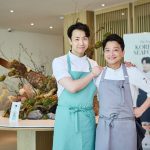
Some culinary collaborations meet in the middle. The best ones don’t—they hold their ground, listen closely, and arrive at something neither could have created alone. That’s the idea behind Atas Key Tables, a new chef-collaboration series at Atas, The Ruma Hotel and Residences’ signature restaurant. Pairing Executive Chef Suhalmi Tasir with international culinary talents, the series is less about guest appearances and more about the conversations that unfold through food. The series opened with a four hands dinner bringing together Suhalmi and guest Chef Masahiko Kawano.
On paper, it sounds like a culinary blind date: one chef invested in elevating Malaysian flavours, and the other known for the quiet precision of Japanese cooking, shaped by classical French techniques and anchored by ingredients such as miso, mirin, and sake.
Yet both described it in remarkably similar terms, centred on a mutual recognition of each other’s culinary identity. “I realised that while our techniques and languages are different, we both use food to evoke a sense of home, warmth, and nostalgia. We left our egos at the kitchen door and listened to the ingredients,” says Masahiko.
Suhalmi agrees, adding that, despite the language barrier, there was little need for translation when working in the kitchen with Masahiko. “We understood each other quickly through food,” he assures.
Executive Chef Suhalmi Tasir

The two chefs arrived at the collaboration from very different starting points. Suhalmi grew up with traditional Malay cooking, inspired by a family heritage rooted in the catering industry, making the kitchen feel like a natural path from early on. “I’ve become increasingly focused on showcasing [authentic] Malaysian flavours through a modern interpretation,” he says. Suhalmi’s
philosophy is grounded in tradition and innovation in equal measure, with a belief that local ingredients belong in world-class dining.
Chef Masahiko Kawano

Masahiko’s story began in a very different kitchen. From the age of five, he often cooked in place of his busy working mother and, in the process, discovered the joy of making food that comforts others. “What drew me in was the realisation that food could heal and express love when words weren’t enough,” he recalls.
Two peas in a pot

Masahiko came on board because he shares the same principles as Suhalmi and Atas. “He has a deep respect for precision and craftsmanship, while his Michelin-starred experience brings a unique perspective to the collaboration,” explains Suhalmi.
Masahiko embodies the artistry and excellence that Atas Key Tables aims to celebrate, with his philosophy aligning naturally with the restaurant’s values of discipline, thoughtfulness, and an ingredient-driven approach. “The opportunity to blend my structured French-Japanese background with Malaysia’s vibrant, soulful heritage is incredibly inspiring,” he notes.
He was also fascinated by the way Malaysian chefs use spices. “In Japanese cooking, we lean heavily towards restraint, but Malaysian cuisine uses spices to build bold layers,” says Masahiko.
The dishes evolved through constant collaboration and refinement. “We spent time ensuring every element felt balanced, so the final menu reflected a genuine dialogue between our perspectives,” Suhalmi says. Some were even revisited repeatedly until both culinary identities felt seamlessly integrated.
A meticulous result

As the inaugural edition of Atas Key Tables, the collaboration brought out the best in both chefs. That shared sensibility became the foundation of a five-course menu that draws from Japan and Malaysia without descending into a culinary identity crisis.
For Suhalmi, the challenge was never about toning local flavours down but refining them. Ingredients such as torch ginger, kaffir lime, Tambun pomelo, and heirloom Bario rice appear throughout the menu, while dishes inspired by nasi ulam and Angus short rib in rendang tok style serve as cultural anchors. He ensures the experience remains rooted in Malaysia while embracing international influences.
Japanese flavours and classical French techniques brought clarity and elegance to the menu. That exchange was perhaps best expressed in the Chawanmushi with Borneo lobster and shiso flower, which Suhalmi describes as the dish that most clearly captured both chefs’ personalities on a single plate. It embodied what the collaboration did best: finding common ground without erasing differences.
Along the way, Suhalmi found himself drawn to Masahiko’s appreciation for simplicity, as Masahiko became increasingly fascinated by Malaysia’s relationship with spice.
A lesson learnt

Beyond the food itself, the exchange left a lasting impression on Suhalmi, both personally and professionally. Given the opportunity, he would gladly spend time immersing himself in the discipline and precision that define Masahiko’s craft.
As for Masahiko, he hopes to delve deeper into Malaysian ingredients and food culture. “Exploring indigenous herbs and jungle produce through the lens of classical French technique would be a fascinating next step,” he shares.
Learning about the roots of Suhalmi’s cooking also gave Masahiko a deeper appreciation for the chef’s perspective. “I would love to learn the traditional, generational secrets behind Malaysian spices and understand how they coax such deep, explosive flavours from local roots and herbs,” he says.
Redefining Malaysia’s place at the table

Atas Key Tables is more than just a chef collaboration; it is a step towards positioning Malaysia as a serious dining destination and an active participant in international culinary conversations rather than simply a gracious host. “This creates opportunities to showcase local ingredients and talent to a wider audience, while challenging us to raise our own standards through global exchange,” explains Suhalmi.
He adds that the initiative reflects The Ruma’s commitment to thoughtful luxury hospitality, setting a benchmark for how Malaysian dining can engage globally without losing its identity.
“I’m always thinking about who I am and where my roots lie. Innovation isn’t about discarding tradition, but using classic, ironclad techniques as a foundation to view local ingredients through a new vision,” says Masahiko.
Atas Key Tables is less about celebrity-chef spectacle and more about meaningful exchange. It’s a conversation between cultures that extends beyond a single dinner, creating opportunites for chefs to share their ideas, techniques, and perspectives. That dialogue continues with the next instalment, which welcomes Singapore’s GU:UM restaurant and its contemporary take on Korean flavours to the table.
All images are courtesy The Ruma Hotel and Residence